AI-Powered YML Translator

Translate YAML files without breaking indentation, keys, or code. Intelligent yml translation tool for developers

yml translator online

Syntax-Aware YML Translator for Configuration and Localization Files

Stop manually editing YAML translation files line by line

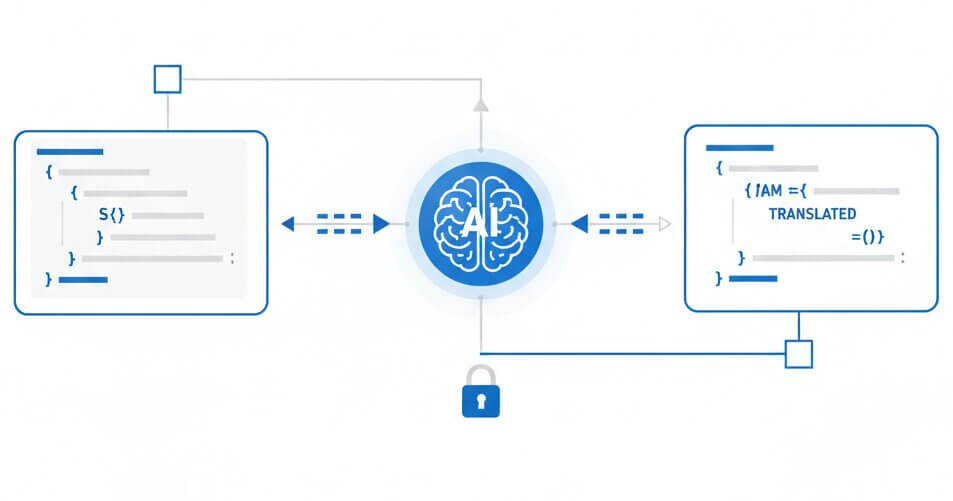
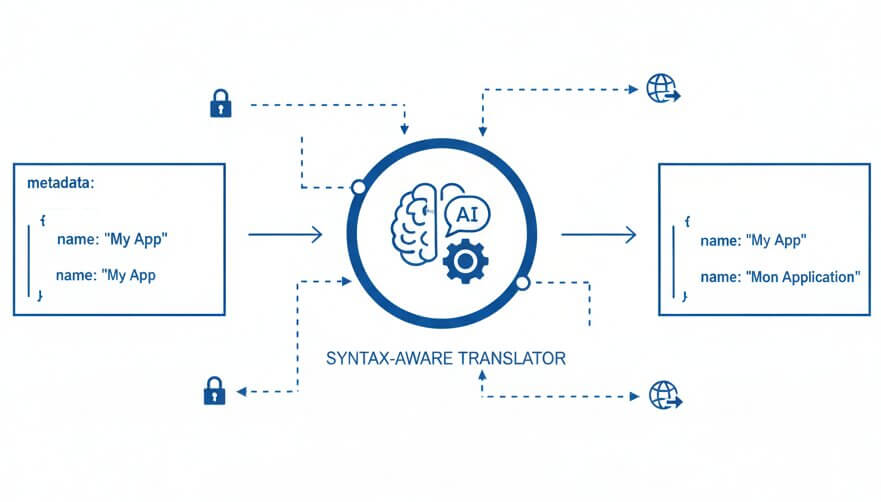
YAML files power modern software infrastructure from Kubernetes configs and CI/CD pipelines to app localization strings. A single misplaced space or translated key can break an entire deployment. Generic translation tools treat YML as plain text, corrupting the hierarchical structure and indentation rules that make YAML functional. Our yml translation tool uses AI trained on code structure to distinguish between keys that must remain unchanged and translatable string values. The parser identifies nested mappings, sequences, and anchors, then applies translations only to human-readable content. Indentation depth, line breaks, and special characters stay the same. The result is a working yaml translation file ready for immediate deployment across internationalization workflows, GitHub Actions, Docker Compose setups, or app store submissions.
yaml translate tool with structure preservation

How it Works

Three steps to translate YAML files safely

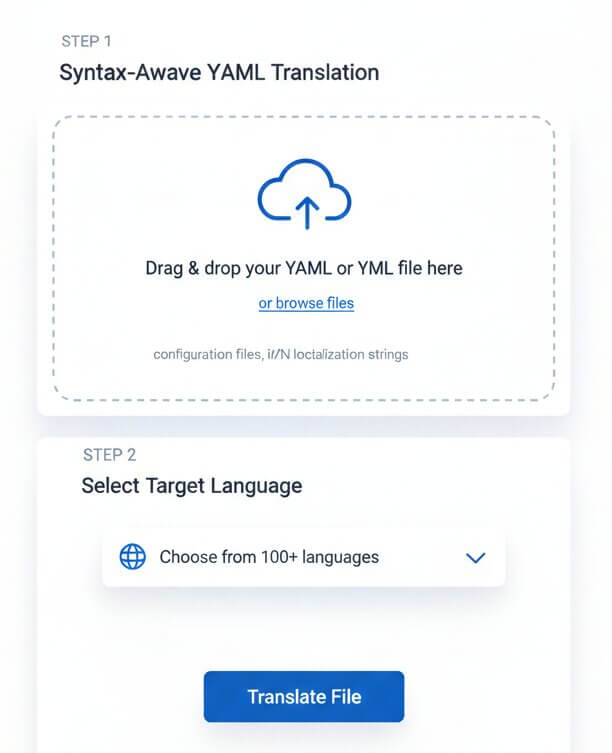
Upload YML File

Drop a YAML or YML file into the translator. Supports configuration files, i18n localization strings, CI/CD definitions, and any valid YAML document up to several megabytes.

Select Target Language

Choose from 100+ languages and initiate translation. The parser scans YAML structure, isolates translatable string values, and applies AI-powered translation while leaving keys, anchors, and syntax untouched.

Download Working File

Receive a fully functional yaml translation file with correct indentation and syntax. No manual fixing needed deploy directly to production or commit to version control.

Features

Built for developers and localization engineers

yml translation tool interface

Syntax Preservation

Key-Value Recognition

Indentation Control

Anchor & Alias Safe

Multi-Language Support

Batch Processing

Why use this YML translator instead of manual editing?

yaml files translate with ai

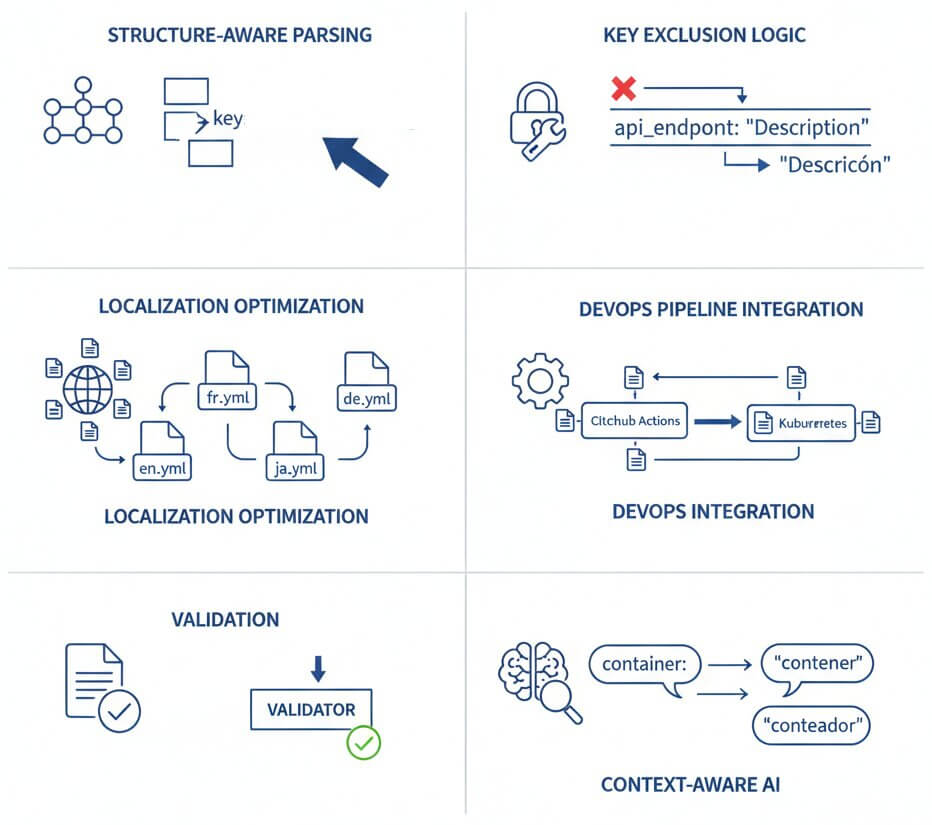
Structure-Aware Parsing

YAML is whitespace-sensitive. A single extra space breaks the hierarchy. The yml translation tool parses the abstract syntax tree of the file, mapping each node's depth and type. Translation happens at the value level only, so nested lists, dictionaries, and multi-line strings remain structurally valid.

Key Exclusion Logic

Translating a YAML key like "api_endpoint" into "punto_final_api" crashes applications. The tool automatically identifies keys, tags, anchors, and comments as non-translatable. Only string literals assigned as values get processed, preventing configuration corruption.

Localization File Optimization

Mobile apps and web projects often store translations in YAML format for frameworks like Ruby on Rails, Flutter, or i18next. Manually duplicating and translating locale files is error-prone. Upload the base language file, receive translated versions for each target locale, maintaining identical key structures.

DevOps Pipeline Integration

CI/CD pipelines rely on YAML configs for GitHub Actions, GitLab CI, CircleCI, and Kubernetes manifests. When expanding infrastructure to new regions, documentation and error messages inside these files need translation. Automated yaml translate processes reduce internationalization overhead.

Validation After Translation

After translation, the file passes through a YAML validator to confirm it can be parsed without errors. Invalid indentation, unclosed quotes, or duplicate keys trigger warnings before download, preventing broken deployments.

Context-Aware AI Models

Technical strings in configuration files require precise terminology. The AI recognizes technical context distinguishing between "container" as a shipping term versus a Docker container and applies domain-specific translations appropriate for software documentation and infrastructure code.

Common use cases for YAML file translation

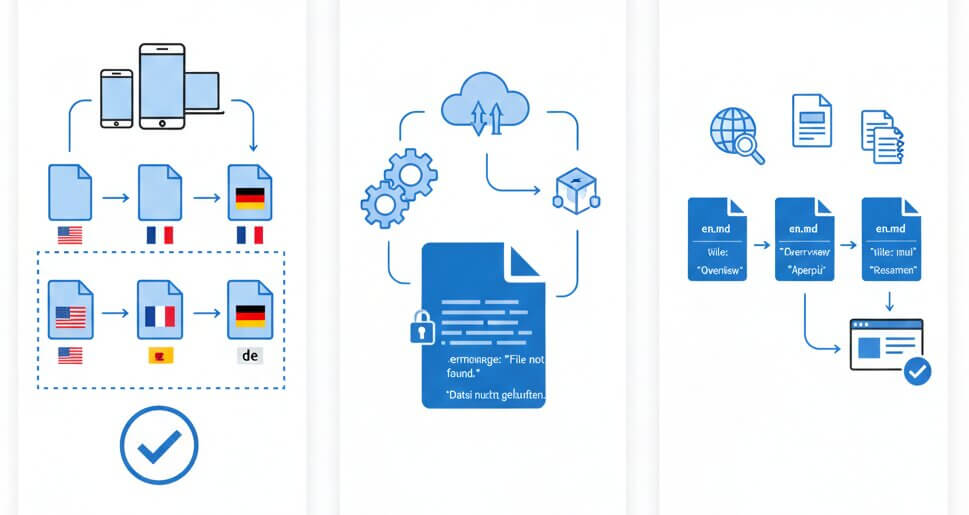
Mobile and web applications store interface text in YAML for frameworks like Flutter, React Native, and Rails i18n. A typical app may have 500+ translatable strings nested across multiple locale files. Manually copying the structure and translating each value introduces typos and missing keys.

Using a yml translator automates the duplication of en.yml into fr.yml, es.yml, de.yml, etc., with all nested paths preserved. The app reads the translated files directly without code changes, accelerating time-to-market for international releases.

DevOps teams manage hundreds of YAML files for Kubernetes deployments, Ansible playbooks, and CI pipelines. When infrastructure serves global users, error messages, log outputs, and alert notifications inside these configs should appear in local languages.

The yml translation tool processes these technical files safely, translating user-facing strings while preserving variable names, resource identifiers, and command syntax. Teams can maintain multilingual infrastructure-as-code without breaking automation or deployments.

Static site generators like Jekyll, Hugo, and MkDocs often use YAML for front matter and navigation menus. A documentation site with 200 markdown files each containing YAML metadata needs efficient localization to serve international developer communities.

Batch processing YAML files translates all metadata in one pass (page titles, descriptions, menu labels) while preserving URLs, template names, and custom fields. The translated docs deploy immediately without reformatting or link breakage.

yml translator use cases

Pricing

Translate YML files starting today

Lite

$9 / mo
  • 400.000 characters per month
  • Syntax-aware YAML parsing
  • Indentation & structure preservation
  • 100+ language support
Free Trial

Starter

$19 / mo
  • 1.000.000 characters per month
  • Syntax-aware YAML parsing
  • Indentation & structure preservation
  • 100+ language support
Free Trial

Business

$49 / mo
  • 3.000.000 characters per month
  • Unlimited users & collaboration
  • All Pro features
  • Priority technical support
Free Trial
Save 25%

Yearly

$169 / year
  • 12.000.000 characters per year
  • Unlimited users & collaboration
  • All Pro features
  • Priority technical support
Free Trial

F.A.Q

Frequently Asked Questions

No. The tool parses YAML structure before translation, identifying each node's depth, type, and role. Only string values marked as translatable are modified. Indentation, key names, anchors, and special characters remain unchanged. Every output file passes a syntax validator before download.

Yes. The yml translation tool is designed for infrastructure and CI/CD files. It distinguishes between resource definitions, variable names, and human-readable strings. User-facing text (error messages, log outputs, descriptions) is translated, while technical identifiers are preserved.

The parser handles advanced YAML features. Nested sequences and mappings maintain their hierarchy. Multi-line strings (using | or >) preserve line breaks and indentation. Anchors (&) and aliases (*) are detected and excluded from translation to prevent reference corruption.

Generic tools treat YAML as plain text, translating keys, tags, and values indiscriminately. This corrupts the file structure. The yml translator applies semantic understanding recognizing which parts are code and which are translatable content then modifies only the appropriate string literals.

Both .yml and .yaml extensions are accepted. The tool also supports other structured formats including JSON, XML, HTML, CSV, SRT, XLIFF, and standard document formats like DOCX and PDF when needed for broader localization workflows.

Over 100 languages are available, covering all major world languages and many regional dialects. Common targets for software localization include Spanish, French, German, Japanese, Korean, Chinese (Simplified and Traditional), Portuguese, Italian, Dutch, and Russian.

The AI models are trained on technical and software-specific corpora, producing translations appropriate for developer-facing content. For customer-facing UI strings in high-stakes applications, a final human review is recommended, but the output is production-ready for most use cases.

Yes. Upload yml files and receive translated versions for each selected language. This is ideal for localization workflows with separate locale files per language.

A standard locale file with 100-200 strings processes in under 60 seconds. Larger configuration files or batches may take a few minutes. Processing time scales with the character count and number of target languages selected.

Yes. A free trial is available with no credit card required. Test the yaml translate functionality on real files before committing to a subscription. The trial includes full access to syntax preservation and multi-language support.